[vc_row row_style=”full-width” padding_size=”m-padding” css=”.vc_custom_1454999252257{padding-top: 0px !important;}”][vc_column padding_size=”no-padding”][rev_slider_vc alias=”earlylearning”][/vc_column][/vc_row][vc_row padding_size=”m-padding” css=”.vc_custom_1555504529651{padding-bottom: 0px !important;}”][vc_column overlap=”top” overlap_distance=”75px” width=”2/3″][vc_empty_space height=”55px”][wyde_heading title_tag=”h6″ style=”7″ title=”The Importance of High-Quality Early Learning and Why Kentucky Should Invest” el_class=”strategyheading” animation=”slideInDown” animation_delay=”0.5″ subheading_color=”#015edd”][vc_empty_space height=”25px”][vc_custom_heading text=”Kentucky’s young children and their families benefit from high-quality early learning that keeps each and every child on a path toward proficiency in reading and mathematics by the end of the third grade. It is imperative to increase the number of infants, toddlers, and preschool children from low-income families enrolled in high-quality child care and public preschool through policies, practices, and funding that sustain quality early learning environments.” font_container=”tag:p|font_size:18px|text_align:left|color:%23666666|line_height:1.7″ google_fonts=”font_family:Muli%3A300%2C300italic%2Cregular%2Citalic|font_style:400%20regular%3A400%3Anormal” animation=”slideInUp” animation_delay=”0.6″][wyde_heading title_tag=”h6″ style=”7″ title=”Impact on Learning” el_class=”strategyheading” animation=”slideInDown” animation_delay=”0.5″ subheading_color=”#015edd”][vc_empty_space height=”25px”][vc_column_text animation=”slideInUp” animation_delay=”.6″]Kentucky’s young children and their families benefit from high-quality early learning that keeps every child on a path toward proficiency in reading and mathematics by the end of the third grade. Research demonstrates that learning begins early and high-quality early learning impacts long-term outcomes for students.
- Cognitive skill development begins early and rapidly. The Toddler Brain by Laura A. Jana, M.D. indicates that 85-90% of brain development occurs before the age of 5.
- Research also shows children who participate in high-quality preschool programs are 40 percent less likely to drop out of school and 50 percent less likely to be placed in special education.
[/vc_column_text][wyde_heading title_tag=”h6″ style=”7″ title=”Impact on Workforce” el_class=”strategyheading” animation=”slideInDown” animation_delay=”0.5″ subheading_color=”#015edd”][vc_empty_space height=”25px”][vc_column_text animation=”slideInUp” animation_delay=”.6″]Investments in high-quality early childhood make business sense – by the numbers – and also provide opportunities for families to access the workforce.
[/vc_column_text][wyde_heading title_tag=”h6″ style=”7″ title=”Return on Investment” el_class=”strategyheading” animation=”slideInDown” animation_delay=”0.5″ subheading_color=”#015edd”][vc_empty_space height=”25px”][vc_column_text animation=”slideInUp” animation_delay=”.6″]What’s more, the investments in high-quality early childhood education are not only a solution for reducing achievement gaps and improving academic performance but pay long-term dividends to society as a whole. These benefits include reduced need for special education, higher rates of educational attainment, a reduction in health costs, a reduction in the incidence of crime, and less demand for social welfare services.
[/vc_column_text][wyde_heading title_tag=”h6″ style=”7″ title=”Kentucky’s Current Standing in High-Quality Early Learning Environments” el_class=”strategyheading” animation=”slideInDown” animation_delay=”0.5″ subheading_color=”#015edd”][vc_empty_space height=”25px”][vc_column_text animation=”slideInUp” animation_delay=”.6″]
- Kentucky ranks 41st in the nation in the number of three- and four-year olds enrolled in preschool.
- In 2017, only 50% of incoming kindergarten students scored “prepared” on the BRIGANCE screener. Half of Kentucky’s children are starting behind, and achievement gaps seen later in school begin early. Readiness rates are far lower for Hispanic students, English-language learners, students with learning differences, and students from families with low income.
- More than half (53% or 170,000) of Kentucky’s children live under 200% of the federal poverty level, the income necessary to meet basic needs of food, housing, health care, child care, and transportation. Yet our child care assistance program only serves families at or below 160% and currently only serves 27,000 children.
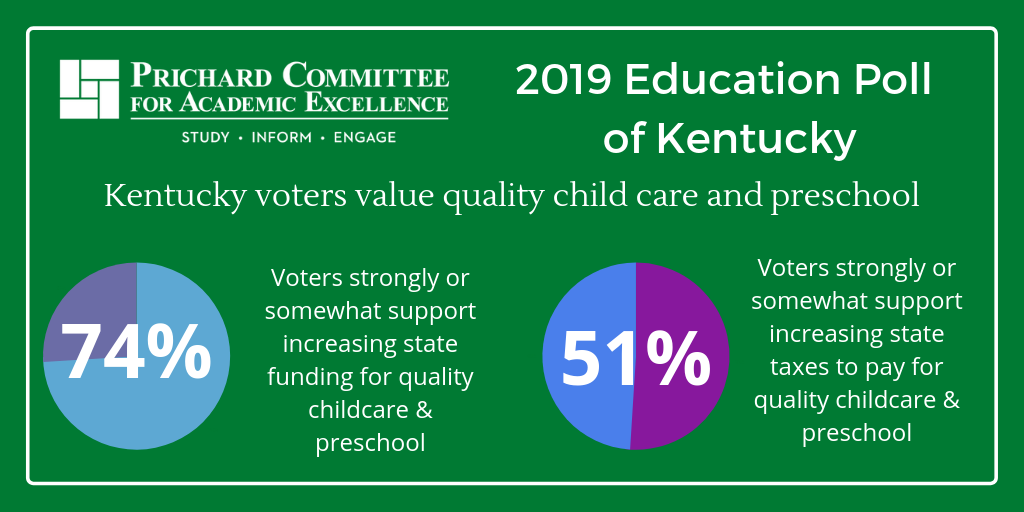
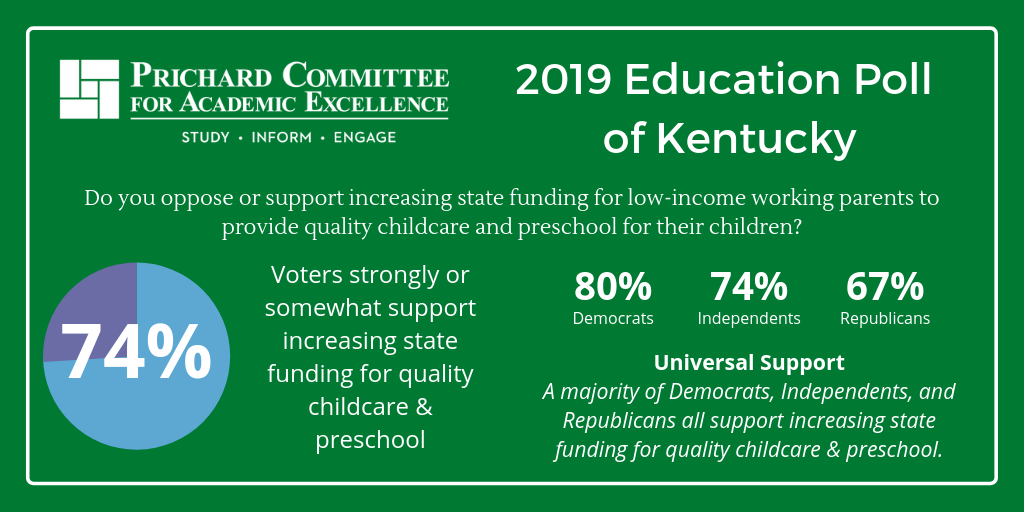
[/vc_column_text][wyde_heading title_tag=”h6″ style=”7″ title=”What Does Kentucky Need?” el_class=”strategyheading” animation=”slideInDown” animation_delay=”0.5″ subheading_color=”#015edd”][vc_empty_space height=”25px”][vc_column_text animation=”slideInUp” animation_delay=”.6″]Many Kentucky children who most need the foundation of high-quality early learning do not have the opportunity due to cost and/or a lack of high-quality programs in their area. To build a strong future for Kentucky, the best economic investment we can make is in early education that gives all students a strong foundation.
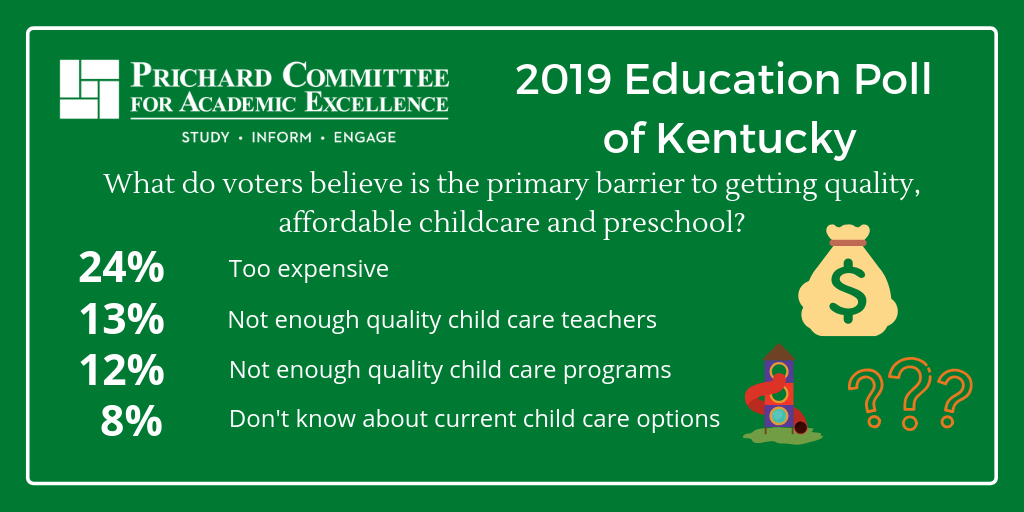
The evidence is clear – a high-quality early childhood environment “can enhance children’s development, reduce achievement gaps at kindergarten entry, and even have long-term benefits in school and beyond.”
Kentucky needs greater commitment from policymakers to make the critical investments necessary, as well as greater commitment from communities to find new ways to deliver the highest quality early childhood programs. Specific steps the state can take to support a high-quality early childhood education system for all kids include:
Increasing eligibility level and investment in high-quality, full-day early learning environments – both preschool and childcare – and incentivize public-private partnerships.
- This builds learning that is the foundation for future success and helps families enter and stay in the workforce.
Supporting family engagement and maternal and child well-being through sustained investment in HANDS home visiting program.
[/vc_column_text][/vc_column][vc_column width=”1/3″ css=”.vc_custom_1555510637298{padding-top: 10px !important;padding-right: 10px !important;padding-bottom: 10px !important;padding-left: 10px !important;}”][vc_single_image alignment=”center” onclick=”link_image” image=”8808″ animation=”slideInRight” animation_delay=”.6″]
For more results, click here
[vc_empty_space height=”20px”][vc_widget_sidebar sidebar_id=”page1″][vc_single_image alignment=”center” onclick=”link_image” image=”7163″ animation=”slideInRight” animation_delay=”.6″][/vc_column][/vc_row]