

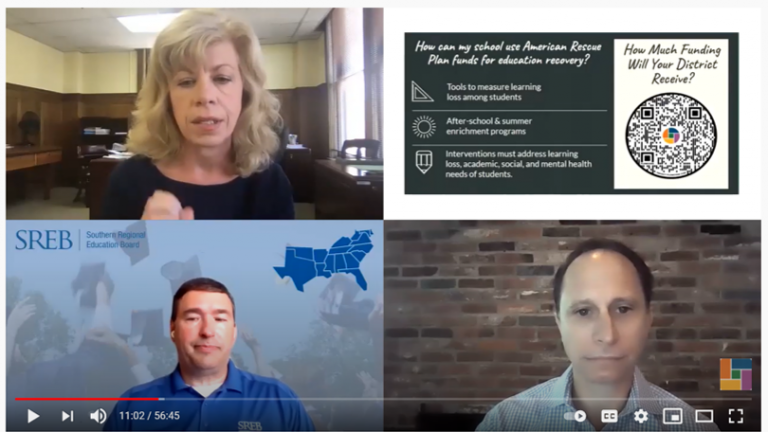
This week on Innovations in Education for a Big Bold Future, we continued to explore education recovery and building a new foundation for Kentucky’s K-12 public school system. Brigitte led a robust discussion with Dr. Stephen Pruitt, President of the Southern Regional Education Board, and Michael Petrilli, President of the Fordham Institute.
“There’s widespread agreement that a lot of kids have suffered over the last 15 months and we all know that from our own lives,” said Petrilli. “This fall, we should expect that there are some kids who are going to be traumatized. They’ve lost loved ones, they’ve been disconnected from friends and family. A lot of their families have been through incredible hardship, so we should expect that some kids are going to come back and really need a lot. Schools are really going to have really strong systems to identify the kids who need extra help and get them that help.”
Pruitt added that educators and school staff will also need supports to deal with COVID-related trauma as well. “We really had to strive to take care of ourselves so we could show up the way we needed to.”
Outside of using America Rescue Plans for social-emotional and trauma-informed curriculum, schools can also use Medicaid for student mental health, according to Petrilli.
The Fordham Institute has been working on educating Americans about the importance of assessments to monitor learning growth.
“When local school districts use those assessments effectively, they can help them make important decisions for kids about how to group them appropriately as they are making their way through different milestones in reading and math,” said Petrilli. “Some kids who’ve hardly been attending school at all, we need to know where they’re at so we can get the support to them.”
Pruitt, who served as Kentucky’s education commissioner from 2015 to 2018, said that testing is part of good instruction. “From an SREB standpoint, we believe that it’s important that state testing is done. But this year, we need to know where these kids are. We do need to know what we need to do to help them.”
Pruitt said that districts will need to be cognizant of how they are spending the funding, and to constantly be evaluating how the dollars are impacting student outcomes.
“When you have this type of windfall of funds, there is a tendency to want to buy everything. But eventually there will be a financial cliff. We need to really take this time to think about how to invest in our teachers and our systems to be able to do a better job,” said Pruitt.
These decisions, he continued, will need to be made based on data, community feedback, and school climate and culture. District plans for use of ARP funding are due to the Kentucky Department of Education by July 31. The Prichard Committee has been urging its members and partners to talk to local boards of education and district leadership about what they’ve observed during the pandemic, and how they think some of the funding should be utilized.
“Given the need and the resources available, it is time for communities to roll up their sleeves and have the creative, solutions-focused, conversations about how to use what we’ve learned in the past year to do more than recover – we must build a new foundation for education – one that is stronger, more resilient, and seeks to repair the challenges and inequities laid bare amidst COVID,” said Prichard Committee President and CEO Brigitte Blom Ramsey.
For additional resources about the American Rescue Plan, including how much funding your district will receive, visit our ARP toolkit online. If you would like to schedule a community conversation about ARP with the Prichard Committee’s assistance, please contact Community Engagement Coordinator Andria Jackson.