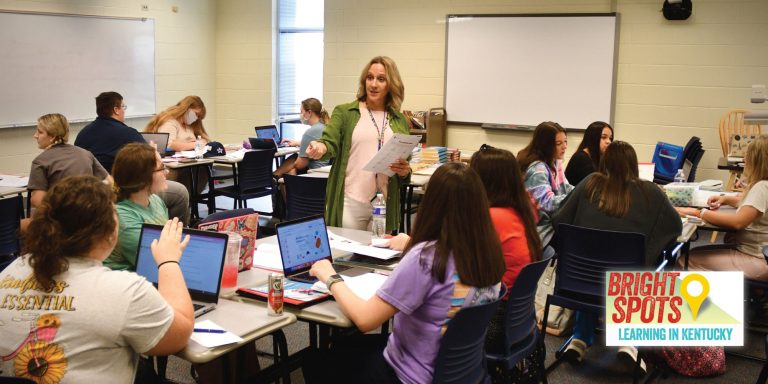
RICHMOND, Ky. — In a course about teaching elementary social studies, a room of mostly juniors at Eastern Kentucky University discusses how to make sure children understand basics like civics, rights, laws, and personal responsibilities.
Throughout their teacher education program, students cover academic content, classroom management, education systems, teaching methods, cognitive development, assessment systems, and more. Even so, many education students leave college concerned about areas where they still feel unprepared and inexperienced.
They expect to stand a good chance against social studies. Winning over parents and families, however, often feels like a treacherous unknown.
“It’s what I’m most nervous about,” said Emily Dennis, a junior from Estill County. “If I hadn’t worked at a child care center, I’d be even more nervous. Thinking about being new going into this career, not knowing how to deal with adults and how they are going to react to you is probably the scariest part.”
Brooke Hall, a junior from Union in northern Kentucky, agreed. “When people ask what I’m nervous about, that is my No. 1 thing. Our classes cover content and classroom management, but not so much about how you take initiative or have difficult conversations with parents when some may be very nonchalant and others are always bringing up things.”
Teacher education professors and administrators at Eastern Kentucky and Morehead State universities last year jumped at a more active approach to equipping new teachers to productively connect with families.
Through a grant from the National Association for Family, School, and Community Engagement, the Prichard Committee’s Kentucky Collaborative for Families and Schools began working with college programs to bolster family partnership coursework and field experiences. EKU and Morehead State were the first to join the effort.
“This is a major weakness in our programs across Kentucky and probably across the country. We realized we have to do something different,” said Rebecca Roach, an assistant professor of education at Morehead State. “The importance of family involvement comes up over and over, but what you often hear is that it is awkward and uncomfortable, and largely informed by horror stories.”
The NAFSCE grant and Kentucky program emphasize ways that new educators can
- build respect for the role of parents and families in education,
- establish two-way trusting connections with families to boost student learning, and
- collaborate with families to improve classroom and school achievement.
The national group, based outside Washington, D.C., published a report citing research and case studies to inform teacher education program changes. In Kentucky, the program works with colleges to build family engagement within the current teacher-prep curriculum rather than becoming an add-on. Prichard also worked with school districts near the two colleges last year to create family and teacher panel discussions, surveys, interviews, and monthly learning circles to shape effective strategies.
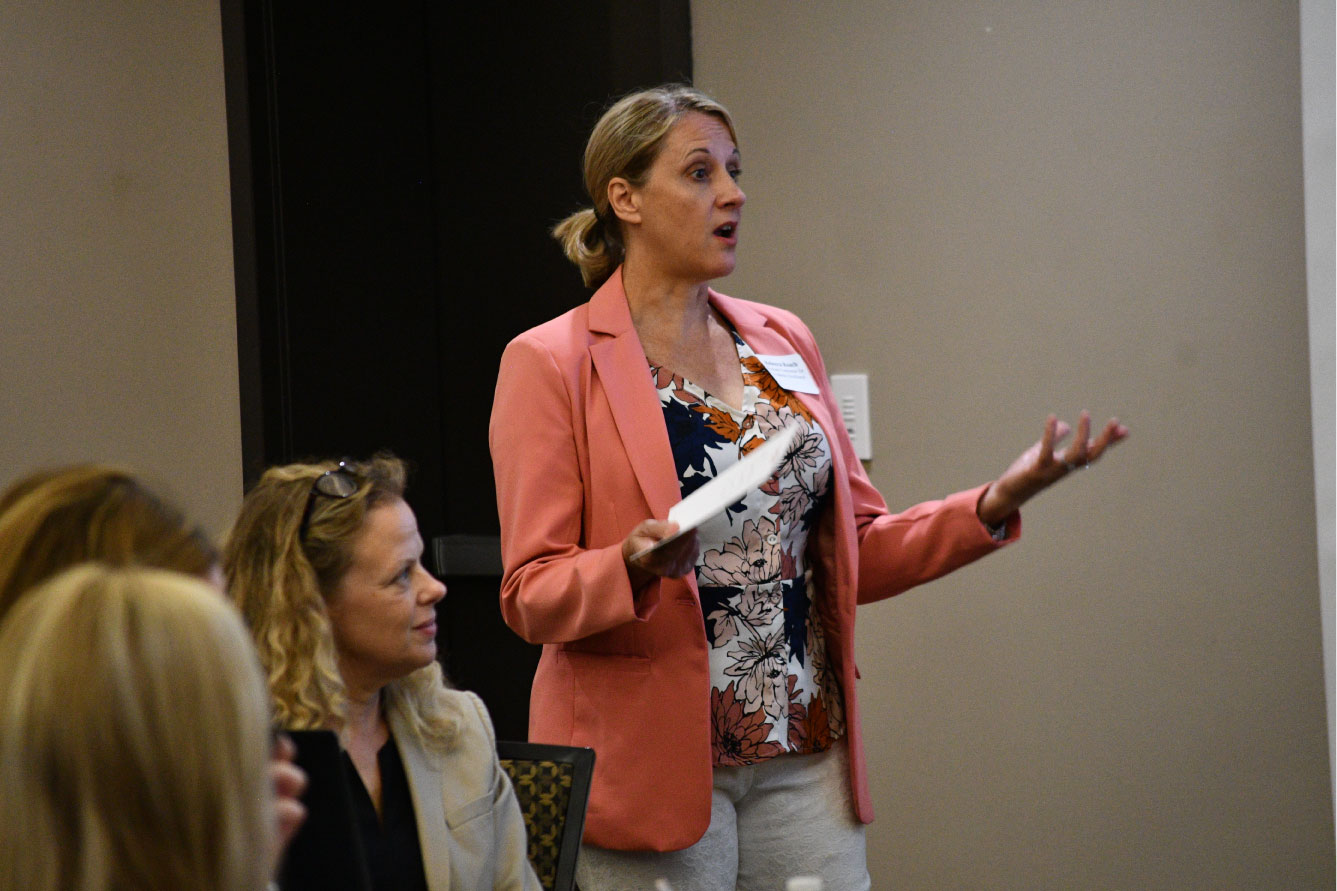
“It’s made me cognizant of weaving families into everything I’m teaching, and showing students how this can happen with brief, informal conversations and collegial language with positive messages,” Roach said. The new strategies should give young teachers confidence in reaching out as a natural extension of their classroom work, she added.
The Prichard effort was the focus of a panel discussion about family engagement at the summer conference of the Kentucky Association of Colleges for Teacher Education. The audience saw short videos made last year by EKU student teachers providing parents questions or topics to discuss at home to reinforce classroom learning.
Emily McCreary of Boyd County, a student at Morehead State, explained how family engagement was included in a reading methods course last year. She said the experience built her confidence in partnering with parents and even experienced teaching colleagues.
“I saw that parent engagement doesn’t have to be scary, and that you don’t have to be a parent to engage them or to be inspiring,” McCreary said. She is eager to put the learning to the test in her student teaching assignment this fall.
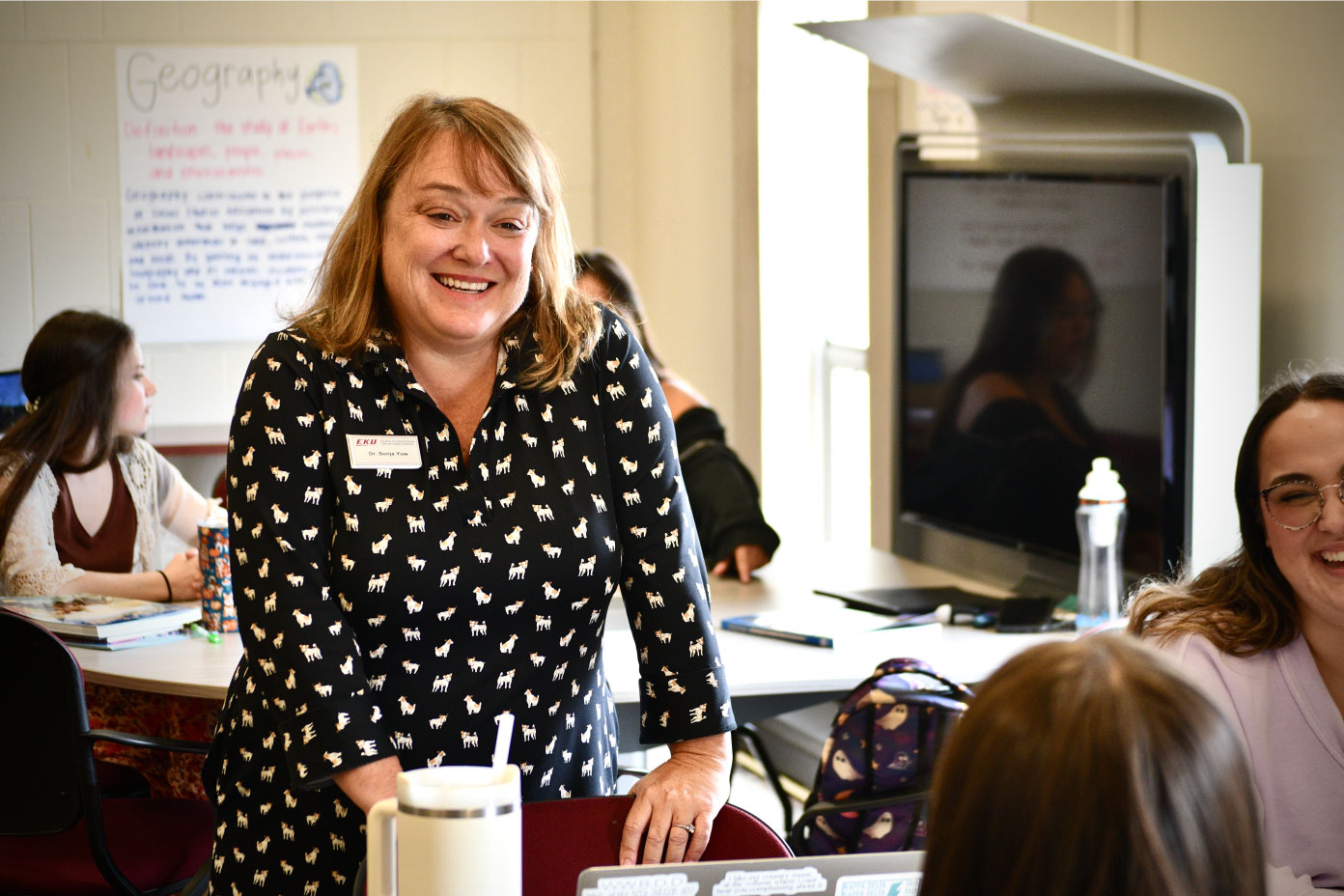
“We tell our students that this is an opportunity for them to be young teacher leaders,” noted Sonja Yow, an associate professor of education at EKU who teaches the social studies education class. “These collaborative interactions can start at the very beginning of a career, and it’s very positive,” she added.
Proponents of the family engagement training expect that it will give their students an edge in the job market and, most important, support academic gains.
“We are totally into it now,” Connie Hodge, an associate professor at EKU said at the teacher education conference in Louisville this summer. “You see the students’ presentations and know that it motivates them and gives them confidence.”
“It just meets a need,” noted Elizabeth Dinkins, dean of the School of Education at Bellarmine University in Louisville and president of KACTE. “Everyone knows we need to prepare future teachers to work with families in today’s world and be intentional.
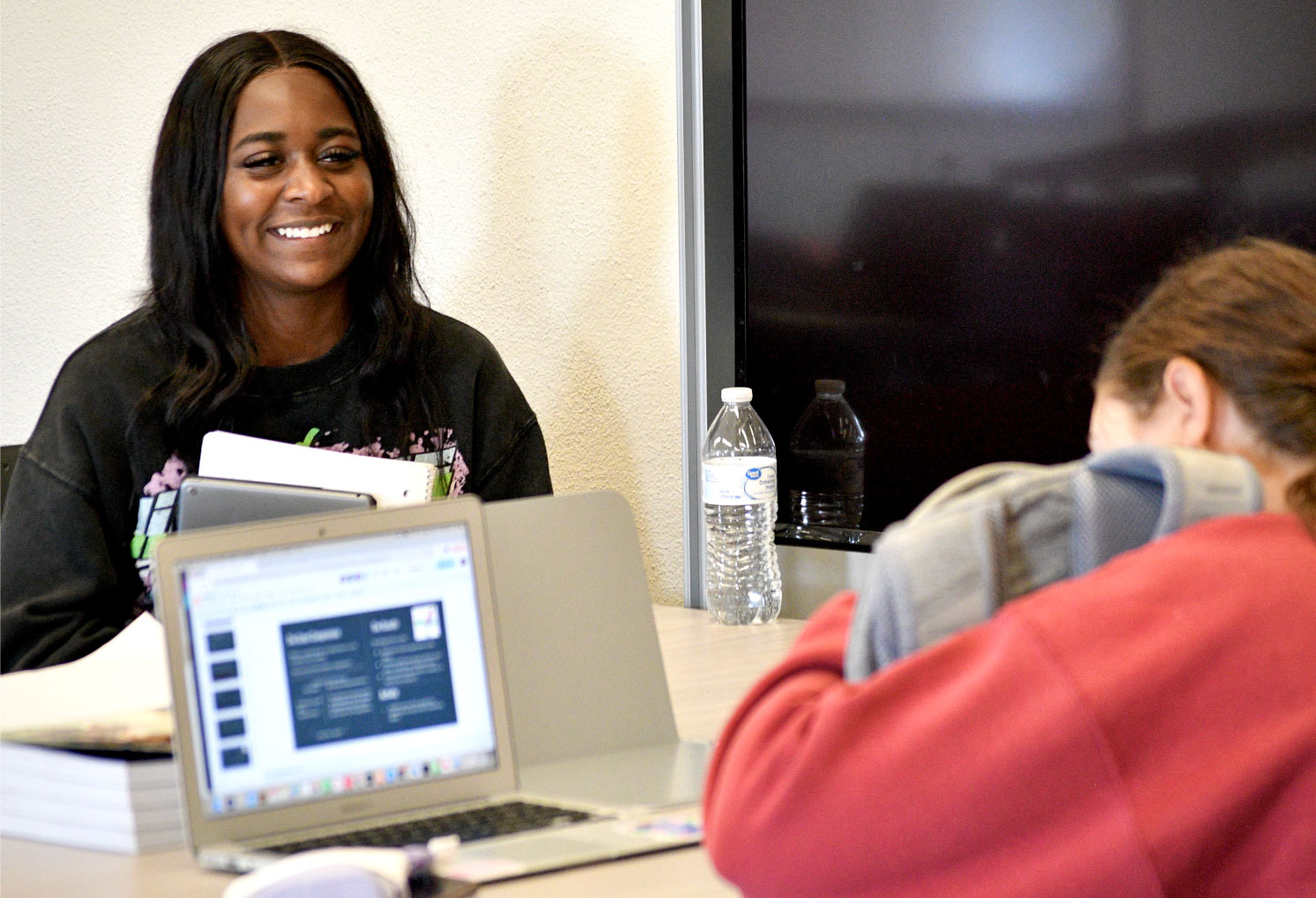
Amiya Griffin-Taylor of Lexington, a junior at EKU, said she is eager for all the strategies and advice available to know how to reach students once she becomes a teacher.
“No one really prepares you for the real thing, and a big part of that is building relationships with students and parents,” she said. “I’m going to be an elementary teacher because I want to make an impact on someone else’s life. I had teachers who didn’t care that much and others who really supported me — sending e-mails, making phone calls, even coming to my graduation. I saw what that means, and I’m all about connections.”